
Case Study • 21 October 2026
Judicial Inquiries & Tamper-Proof CCTV: How Karachi Residents Can Secure Video Evidence for Legal Admissibility
When high-profile legal inquiries depend on digital evidence, unverified or missing video footage can derail justice. Here is how Karachi property owners can ensure tamper-proof CCTV recordings and secure forensic backups.
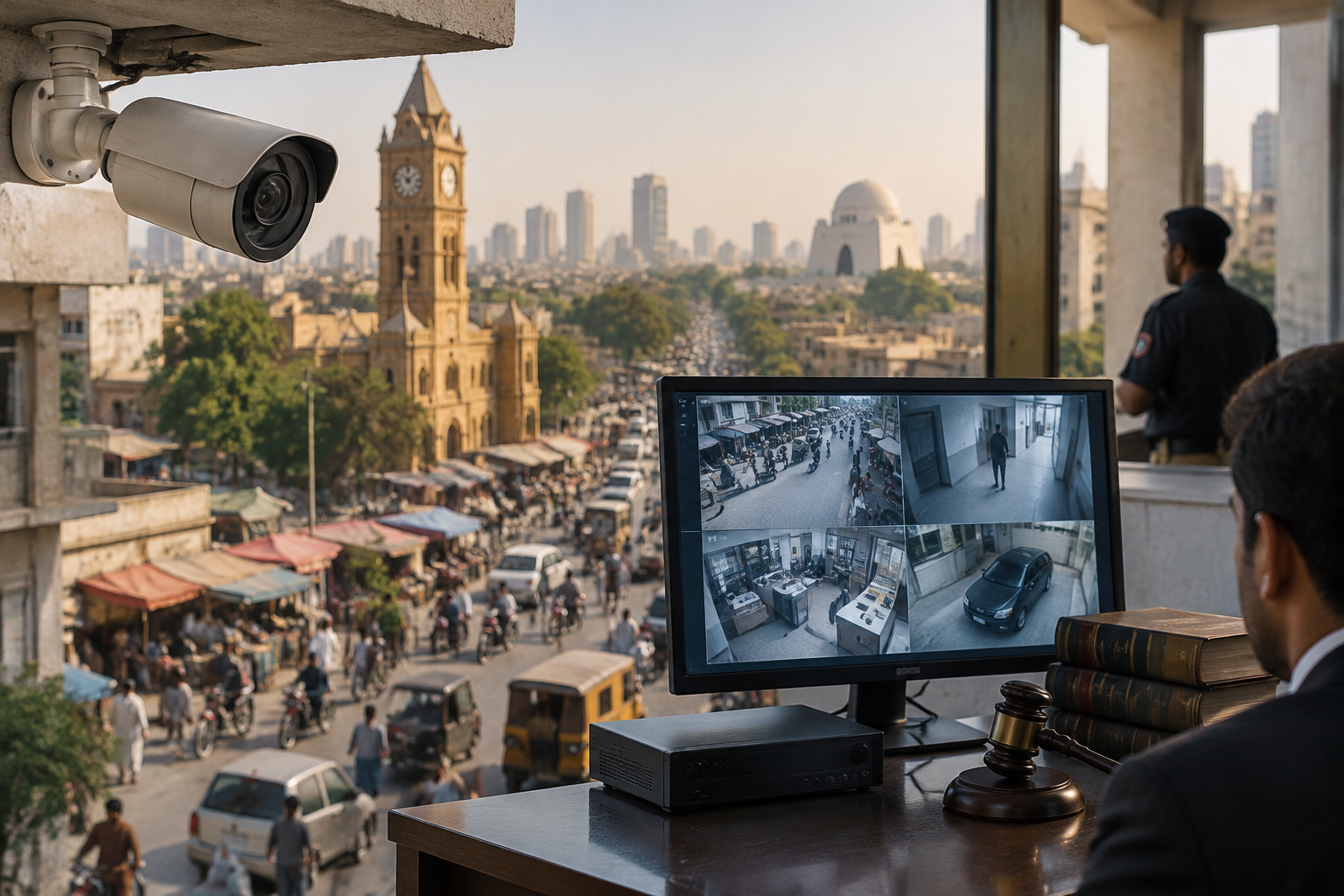
Court-admissible CCTV evidence requires synchronized network time protocol (NTP) time-stamping, digital watermarking, and dual-redundancy backups across locked on-premise NVRs and encrypted off-site cloud storage. For homeowners and business owners across Karachi, maintaining an unbroken digital chain of custody ensures that critical surveillance footage remains forensically sound, untampered, and fully admissible before judicial commissions and courts.
The recent judicial commission findings regarding the Mir Raza murder case in Karachi delivered a sharp indictment of investigative lapses, pointing to significant failures in how evidence was collected, processed, and preserved following the fatal encounter. The commission concluded that the victim was murdered, contradicting initial police narratives and underscoring how vulnerable criminal inquiries become when physical and digital facts are not captured and handled with uncompromising forensic rigor.
In an expansive metropolis like Karachi—spanning sensitive residential enclaves in Clifton and DHA Phase 5 to commercial arteries along Shahrah-e-Faisal and Saddar—private security camera installations regularly hold the single objective record of what truly transpires on our streets. Yet, far too often, pivotal footage is lost to overwriting, equipment seizure, power-related time drifts, or improper export procedures. As a Karachi security specialist with more than a decade of hands-on CCTV installation experience, Babar Khan Lodhi outlines how residents and commercial operators can transform everyday surveillance into tamper-proof, court-grade forensic evidence.
Why does CCTV evidence frequently fail during Karachi judicial inquiries?
When serious incidents occur in Karachi, investigators and legal commissions urgently canvas nearby private residences, banks, and retail outlets for perimeter video feeds. However, defense attorneys and judicial tribunals routinely challenge or dismiss private CCTV footage on specific technical grounds. Understanding these pitfalls is the first step toward securing your property's digital evidence.
The most widespread failure in Karachi surveillance setups is time-stamp desynchronization. Karachi experiences persistent load-shedding and voltage fluctuations. When a standalone DVR or NVR restarts repeatedly without a functional internal real-time clock (RTC) coin-cell battery or an active internet connection to synchronize with a Network Time Protocol (NTP) server, the system clock often resets to a default factory date such as January 1, 2010. Even if an IP camera captures a critical event with crystal clarity, an inaccurate timestamp allows opposing legal teams to argue that the footage was recorded at a completely different time or date, creating reasonable doubt that can collapse an investigation.
A second critical vulnerability is improper file extraction. When shopkeepers or house guards in areas like Gulshan-e-Iqbal or PECHS attempt to provide proof to visiting police officers, they frequently record the LCD monitor screen using a mobile phone camera. Handheld mobile screen recordings compress visual data, introduce optical distortion, fail to record audio frequencies cleanly, and lack embedded cryptographic hash values. In any formal judicial inquiry, a phone recording of a CCTV monitor is classified as secondary, easily manipulated hearsay rather than primary digital evidence.
How can property owners protect DVRs and NVRs from physical tampering or seizure?
In sensitive disputes or police encounter cases, physical recording equipment is vulnerable to unauthorized tampering, accidental formatting, or outright confiscation. If your primary recording hub sits exposed on a security guard's desk or beneath an open reception counter, the integrity of your footage is immediately compromised. Safeguarding physical access is fundamental to professional CCTV installation in Karachi.
First, always house your network video recorder (NVR) or digital video recorder (DVR) inside a heavy-gauge, ventilated steel lockbox equipped with an integrated tamper switch. Mount this lockbox in an unobtrusive, elevated location—such as a false ceiling, a locked electrical distribution room, or a concealed mezzanine closet. The monitor viewed by security guards or domestic staff should only display live video feeds via an auxiliary HDMI or VGA splitter, with the primary admin interface locked behind a strong 16-character alphanumeric password and two-factor authentication (2FA).
Second, never permit any external party to format or remove your primary hard drive without retaining an identical, byte-by-byte forensic clone. High-grade surveillance setups designed by CCTV Karachi incorporate automated mirror recording using multi-bay NVRs configured in RAID 1 or dual-stream off-site NAS backups. If one hard drive is handed over to investigating authorities under formal receipt, your secondary archive remains completely intact, preserving your legal protection against loss or unauthorized deletion.
What technical features make security camera footage court-admissible in Pakistan?
- NTP Server Synchronization: Configure your NVR to sync automatically every 60 minutes with a global or national time server (such as pool.ntp.org), ensuring every millisecond on your video matches verified real-world timelines.
- Cryptographic Watermarking: Ensure your system enables Hikvision or Dahua built-in digital watermarking. Modern enterprise recorders embed an invisible MD5 or SHA-256 cryptographic hash directly into each video frame. If a single frame is altered or edited in post-production software, the native player alerts the court that the video file has been tampered with.
- Native Format Export (.dav / .mp4 with Authentication): Never rely on generic AVI transcodes that strip metadata. Always export surveillance files in native formats alongside the manufacturer's verified verification player (such as Dahua SmartPlayer or Hikvision VSPlayer), which generates an instantaneous digital signature confirmation.
- Minimum 25-30 FPS Recording at 1080p or Higher: Low frame-rate recordings (such as 5 to 10 FPS used to conserve cheap storage) create motion blur during vehicle movement or rapid physical altercations. Maintain at least 25 frames per second on perimeter lenses covering road gates and alleyways.
- ColorVu & Full-Color Low-Light Visibility: Dark, grainy monochrome infrared footage often fails to reveal clothing colors, vehicle paint shades, or facial identifiers under Karachi streetlights. Full-color night vision cameras maintain color fidelity 24/7, providing indispensable forensic context.
How should Karachi residents maintain a verifiable chain of custody for digital footage?
If your security cameras capture an incident that becomes the subject of a police investigation or judicial commission inquiry, handling the footage correctly from minute one is critical. Establishing a documented chain of custody proves to judicial authorities that the digital files presented in court are unaltered duplicates of the original event.
Begin by generating two separate exports onto newly formatted, encrypted USB thumb drives or external solid-state drives. Log the exact export date, system time, camera channel numbers, start time, end time, and the serial number of the NVR from which the files were pulled. Do not open, rename, or trim the exported video files on a domestic PC, as this can overwrite file creation timestamps in Windows Explorer or macOS Finder.
When handing over digital evidence to investigating officers at local police stations—whether in Boat Basin, Darakhshan, Ferozabad, or Gulberg—insist on a signed and stamped seizure memo (Fard-e-Maqboozi) that specifically details the brand, serial number, file names, and byte sizes of the media provided. Retain your secondary clone alongside a written operational log signed by the property owner. This rigorous documentation ensures your private footage withstands aggressive legal cross-examination.
What is the realistic CCTV camera price in Karachi for forensic-grade surveillance?
Securing forensic-grade reliability does not require industrial budgets, but it does require moving away from cheap, unbranded analog kits that lack digital watermarking and fail under Karachi's rigorous electrical environment. When searching for reliable CCTV installation near me, selecting proven equipment backed by professional calibration makes all the difference.
For a high-security residential or commercial property in Karachi, an entry-level forensic-grade system begins with a 4-channel 4MP IP camera package powered over Ethernet (PoE). As of 2026, the complete CCTV camera price in Karachi for a genuine 4-camera Hikvision or Dahua PoE setup—including a dedicated 4K NVR, Western Digital Purple surveillance-grade hard drive, pure copper Cat6 cabling, an offline battery backup UPS, and installation labor—ranges between PKR 85,000 and PKR 125,000. An expanded 8-camera 5MP or 8MP 4K ColorVu system designed for larger compounds in DHA, KDA Scheme 1, or North Nazimabad typically costs between PKR 175,000 and PKR 260,000 depending on storage retention length.
Investing in dependable hardware ensures your cameras do not freeze when high-intensity events occur. Professional installation by CCTV Karachi guarantees that cameras are calibrated at correct viewing angles, road choke points are monitored without blind spots, and digital records are protected by industrial-grade physical and network security.
Frequently Asked Questions
- Can CCTV footage alone prove innocence or guilt in Karachi courts? — While video footage is powerful corroborating evidence under the Qanun-e-Shahadat Order, courts evaluate whether the recording is authentic, unedited, and supported by a verifiable chain of custody, time-stamping, and clear visual identification.
- What happens if my CCTV clock is incorrect when an incident is recorded? — An incorrect timestamp can lead a court or judicial commission to question the chronological relevance of the footage; you must use NTP server synchronization and maintain an active RTC backup battery on your NVR.
- Why should I avoid using mobile phone recordings of my CCTV screen for legal evidence? — Mobile recordings compress video, produce optical moire patterns, distort frame rates, and strip embedded digital watermarks, making them vulnerable to legal rejection as unverified secondary evidence.
- How long should Karachi property owners retain recorded CCTV footage? — Inquiries and judicial commissions often take weeks to commence; property owners should size their surveillance hard drives to retain at least 30 to 45 days of uncompressed, continuous recording.
CCTV Installation in Karachi Areas
Planning a camera installation for your home, shop, or street? Babar Khan Lodhi's team provides a free on-site survey across all of Karachi — reach out on WhatsApp.